
A preschool friendship can begin with a wave across the playground, a shared bucket at the beach, or an invitation to build the tallest cardboard-box castle ever. It can also end in tears when two little hands reach for the same toy. That is why books about friendship for preschoolers can become such welcome companions at story time. They give children gentle words for big feelings and show that a mix-up does not have to spoil the day.
The best friendship stories do not feel like a lecture tucked inside a book. They feel like an adventure: children make BIG plans, something goes a little sideways, and everyone finds a way back to playing, laughing, and belonging. For parents, grandparents, teachers, and caregivers, a good picture book opens the door to conversations that can be hard to start during a busy morning or right after a playground disagreement.
What friendship looks like at preschool age
Preschoolers are just beginning to understand that another child may want something different, feel something different, or need extra time to join in. They may know the words “be nice,” but still need help figuring out what kindness looks like when the crayons are gone, the game has changed, or a friend says no.
A strong friendship book keeps these moments familiar. Look for stories about taking turns, welcoming someone new, helping after an accident, trying again after an argument, and enjoying ordinary fun together. A backyard party, a rainy-day fort, a sandcastle project, or a family trip can all become memorable settings for learning how friends fit into the picture.
The goal is not to find a story where every child behaves perfectly. In fact, books are often more useful when a character gets jealous, impatient, shy, or bossy for a moment. Young listeners recognize themselves in those feelings. What matters is that the story offers a hopeful next step: an apology, a fresh idea, a chance to listen, or room for everyone in the game.
How to choose books about friendship for preschoolers
At ages 3 to 5, a book has to work in a child’s lap, not just sound admirable to an adult. Bright illustrations, clear facial expressions, and a story that moves along help children follow the emotional action. When a character feels left out, children should be able to see it. When the friends solve the problem, the pictures should make that relief feel real.
Rhyming language can be especially lovely for this age. A playful rhythm invites children to predict the next word, repeat a favorite line, and stay close to the story. It also makes a friendship lesson feel lighter. Rather than hearing a rule, children experience the pleasure of characters finding their way through a problem together.
Length matters, too. A longer picture book can be wonderful for a calm bedtime or a classroom circle time, while a shorter, energetic story may be a better fit before preschool, after a long car ride, or during a wiggly afternoon. There is no one perfect format. The right choice depends on your child’s attention span and the moments when your family reads together.
Look for familiar problems with hopeful endings
The most useful stories usually begin with a situation children know well. Maybe a friend wants to play alone. Maybe the rules of a pretend game feel unfair. Maybe a child is nervous about joining a party where everyone already seems to know one another.
A hopeful ending does not mean the problem disappears by magic. It means the characters try something kind and practical. They might ask, “Can I play?” They might make two teams, share the special toy for a few minutes each, or notice that a quiet child has a great idea. These small actions are exactly the ones preschoolers can practice the next time they are at the park, in a classroom, or visiting cousins.
Choose illustrations that give feelings a face
Preschoolers often understand pictures before they can explain emotions in words. Colorful illustrations can show a drooping posture, a worried glance, a proud smile, or the cheerful chaos of friends racing toward a bounce house. Pause on these pages. Ask what the child notices.
You do not need to turn every page into a quiz. A simple comment works beautifully: “That friend looks disappointed. I wonder what happened.” Then let your child point, guess, or tell a story of their own. Sometimes the answer will be silly. Sometimes it will reveal a real worry that has been waiting for a safe moment to come out.
Favor fun over a forced lesson
A friendship book should first be a book your child wants to hear again. If the message is too heavy-handed, a young listener may lose interest before the characters reach the good part. Humor, a little surprise, lively settings, and kid-sized details make the lesson stick without making story time feel like school.
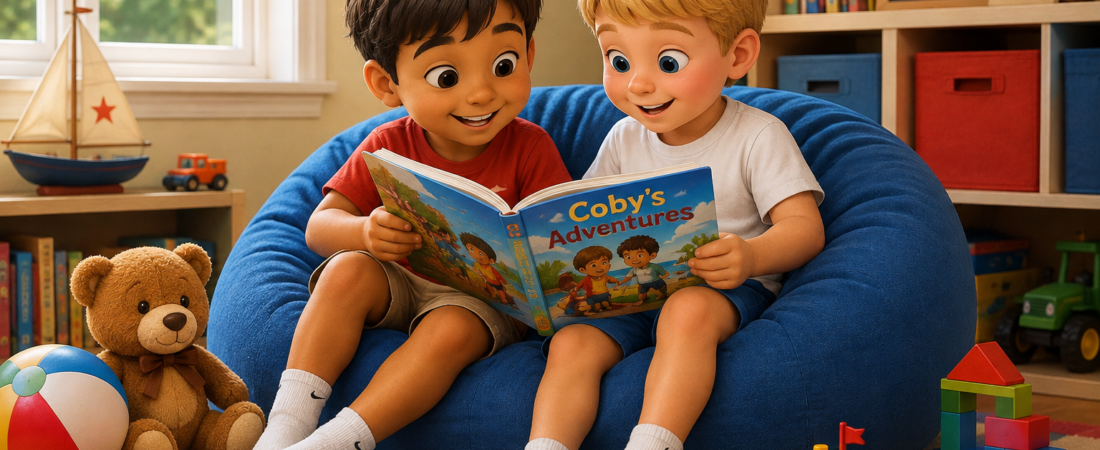
This is where ordinary adventures shine. In Coby’s Adventures, for example, screen-free play, family celebrations, and vacation days create colorful chances for children to notice one another, adapt when plans change, and discover that togetherness can be the greatest part of the adventure.
Make story time a place to practice friendship
The real magic often happens after the page is turned. A friendship story gives adults a gentle way to connect the book to daily life without putting a child on the spot. Instead of asking, “Did you do that today?” try, “What could we do if two friends both wanted the red truck?” The question feels like a game, and it leaves room for many answers.
If a child has had a rough friendship moment, read a related book later, when everyone is calm. A bedtime story can be much easier to hear than advice in the middle of frustration. Children may talk about the character first, then slowly connect the feeling to themselves: “Like when I wanted the swing.”
Teachers and caregivers can use the same approach in a group setting. Read before a class party, a new student’s first day, or a cooperative activity. Then carry one phrase from the story into the day. “How can we make room?” is short enough for preschoolers to remember when the blocks, dress-up clothes, or sidewalk chalk start to feel too special to share.
Friendship themes worth returning to
Friendship is not a single skill children learn once and keep forever. It grows through repeat experiences. A child who can take turns at four may still struggle with jealousy at five. Another child may be wonderfully generous with toys but find it hard to speak up and join a group.
For that reason, a small shelf of friendship stories can be more helpful than one “perfect” title. Choose books that celebrate different parts of connection:
- Making room for a new friend or a shy friend
- Sharing materials, attention, and the spotlight
- Repairing hurt feelings with an apology or kind action
- Working together on a game, project, or pretend adventure
- Appreciating differences in interests, abilities, and personalities
Read them throughout the year, not only after a problem. A book about welcoming someone new feels especially meaningful before school starts. A story about cooperation fits a rainy afternoon spent building an indoor fort. A tale of friends enjoying a beach day may spark a conversation about including everyone in the sandcastle crew.
A gift that keeps the conversation going
When choosing a birthday gift, a holiday surprise, or a book for a new big sibling, friendship stories offer more than a cheerful package to unwrap. They become part of family language. Months later, a child may remember the character who tried again, the friends who made space at the party, or the silly plan that worked better when everyone helped.
For grandparents and relatives, these books are also a sweet way to share a ritual from miles away. Read the same story during a visit, tuck it into a travel bag, or save it for the next sleepover. Familiar pages can make a child feel connected to the people who love them, even when they are not in the same room.
The very best friendship stories leave children with a simple, sunny thought: there is room for one more. Keep a few within easy reach, and the next time two small people disagree over a toy or wonder how to join a game, you will have a colorful place to begin.