
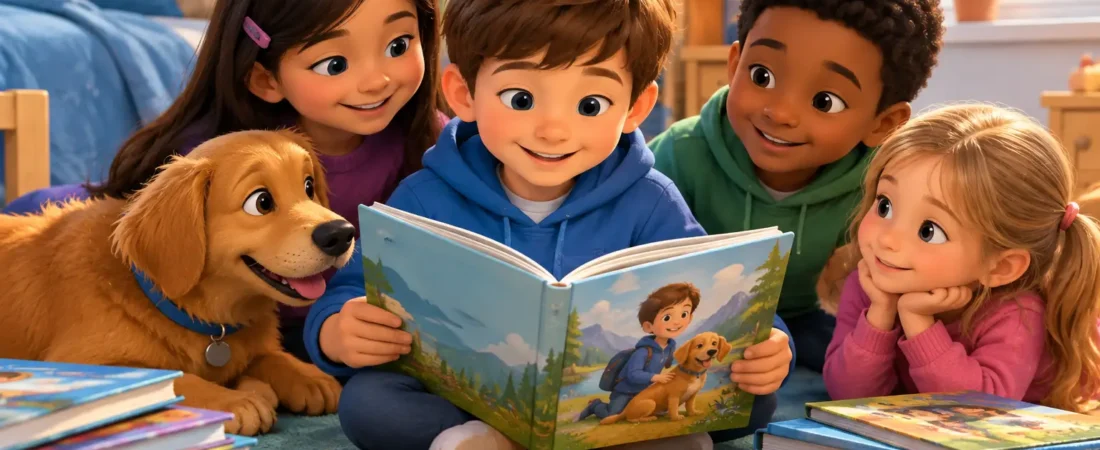
A toy train is suddenly the most fascinating train in the whole house when two children want it at once. The same can be true of a favorite chair, the last blue crayon, or who gets to choose the next game. Those small, familiar moments are exactly why kids books about sharing can be such a welcome part of family reading time. A warm story gives children words for a big feeling before they are standing in the middle of it.
The best sharing stories do not sound like lectures. They show children that wanting something is normal, waiting can be hard, and kindness often leads to more fun for everyone. With colorful pictures, a little humor, and characters who feel like real children, a book can turn a difficult moment into one families recognize together.
What Kids Learn From Books About Sharing
Sharing is often described as handing over an object, but young children are learning much more than that. They are practicing patience, noticing another person’s feelings, taking turns, and discovering that play does not have to be a contest. A thoughtful picture book makes those ideas visible.
For a child who is still learning to say, “Can I have a turn when you are done?” a character’s experience can be a helpful rehearsal. Children may be more willing to talk about a disagreement after seeing it happen on the page. Instead of asking, “Why did you grab that?” a caregiver can ask, “What could the character try next?” The conversation feels gentler, and the child gets room to think.
There is also an important distinction worth making. Sharing does not mean a child must give away a treasured possession whenever someone asks. Good stories can help children understand fair choices: taking turns with a game, offering another activity, using a timer, or saying kindly, “I am still playing with this.” Respecting a child’s boundaries and teaching generosity can belong in the same cheerful conversation.
What Makes a Sharing Story Stick
The books children ask to hear again usually have a real problem at their center. Maybe friends all want the same snack at a picnic. Maybe a group has BIG plans for a cardboard-box spaceship, but everyone wants to be the captain. Maybe one child worries that joining in means losing control of the fun.
A satisfying story lets the problem breathe for a moment. If the character instantly shares without any hesitation, young listeners may not see themselves in the situation. It is more reassuring when a character has to pause, feel frustrated, try an imperfect solution, and then find a better way forward with a friend or family member.
Rhythm matters, too. Rhyming picture books invite children to join in before they can read every word themselves. A repeated line can become a playful reminder later at the playground or around the kitchen table. Colorful illustrations add another layer, showing a worried face softening, a friend waiting patiently, or a group discovering that a game is better with room for everyone.
Choosing Kids Books About Sharing for Ages 4-9
Age matters, but so does a child’s temperament. A four-year-old may connect most quickly with simple scenes involving blocks, stuffed animals, swings, or art supplies. Clear facial expressions and a short, reassuring ending help little listeners follow the emotional change.
Children closer to ages seven through nine may enjoy a story with more moving parts. They can understand the tricky feeling of wanting to lead a game, being left out, or trying to compromise when friends have different ideas. At this age, books can open conversations about fairness, teamwork, and how an apology can help everyone begin again.
When picking a book for home, a classroom, or a gift bag, look for four things:
- A conflict children will recognize from ordinary play.
- Characters who make choices rather than simply being told what to do.
- Illustrations with enough detail for children to revisit.
- An ending that feels hopeful without pretending every disagreement disappears at once.
A book does not need to use the word “sharing” on every page to teach the idea well. Stories about cooperation, welcoming a new friend, building something together, or making room for another person’s plan can carry the same message in a more natural way.
Read the Story, Then Let the Conversation Grow
The magic often happens after the last page. Keep the conversation light and connected to the story rather than turning it into a quiz. You might ask which character had the hardest choice, what made the game more fun, or whether the child has ever felt the same way.
If a child says they would not want to share either, that is a perfectly useful answer. Start there. You can agree that it is hard to stop when you are enjoying something, then wonder aloud what might make the next turn easier. Perhaps the child chooses a timer, picks a different toy while waiting, or gets to decide what happens next in the game.
Try carrying the book’s lesson into a small family activity. Set out crayons for a collaborative picture, build one tall block tower together, or take turns adding silly details to a made-up story. The goal is not a perfect lesson. It is letting children experience that making space for someone else can lead to a bigger, brighter adventure.
Everyday Adventures Make the Best Lessons
Children do not need a faraway setting to encounter meaningful choices. A rainy afternoon indoors can bring arguments over couch cushions and craft supplies. A summer afternoon can bring a busy backyard, a splashy water game, and the challenge of deciding who gets to go first. A family trip can ask children to be flexible when the plan changes.
That familiar, down-to-earth feeling is part of what makes Coby’s Adventures a natural fit for families who want wholesome stories with heart. In the series, ordinary childhood moments become memorable adventures through rhyming language, colorful illustrations, and the energy of family time. Coby’s Summer Party, Coby Unplugged, and the Cape Cod Vacation stories celebrate friendship, creativity, screen-free play, and trying new things together.
These are not stories that ask children to be perfect. They encourage them to notice others, adapt when plans shift, and find joy in the people around them. A bounce house, a beach day, a kite in the breeze, or a cardboard creation can become the start of a conversation about taking turns, including friends, and appreciating what everyone brings to the fun.
A Book Can Become Part of the Routine
Sharing lessons land best when they arrive before a conflict, not only after one. Reading a favorite picture book at bedtime, before a playdate, or during a quiet afternoon gives children a calm moment to absorb the idea. Then, when a real disagreement shows up, they may remember a character who found a kind solution.
Grandparents and relatives can make this especially meaningful by writing a short note inside the cover about a time they loved playing with others as a child. Teachers can return to the same story during the first weeks of a new group, when children are learning how to use materials and space together. Repetition is not boring for young readers. It is how a comforting message becomes familiar enough to use.
For families looking for cheerful, rhyming paperbacks to add to that routine, visit Ken Frank’s bookstore at Books.by/ken-frank. Coby’s Adventures paperbacks are $14.95 each there, making it the best-value place to bring home these colorful family stories. They are also available through Amazon and Barnes & Noble for $19.95 each.
The next time two small hands reach for the same thing, there may still be a few wobbly feelings. That is okay. With patient grown-ups, a little imagination, and a story children know by heart, even an everyday disagreement can become a chance to practice friendship.