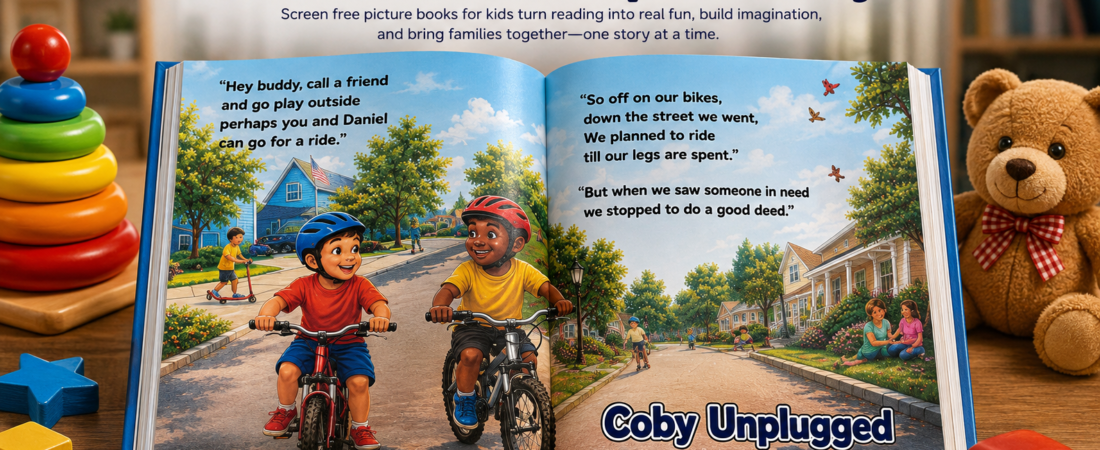
The tablet is charging, the TV is quiet, and suddenly the living room feels a little too still. That is often the moment when screen free picture books for kids can save the afternoon. A lively story does more than fill a few minutes. It gives children a new game to play, a silly rhyme to repeat, and a bright idea for turning the couch cushions, cardboard box, or backyard into an unforgettable adventure.
For children ages 4 to 9, the best screen-free time does not have to look carefully planned. It can begin with a book on the rug, a grown-up voice making funny sound effects, and a child who wants to see what happens next. Picture books make room for connection without asking anyone to be perfect, crafty, or endlessly entertaining.
Why screen free picture books for kids still feel special
Children have always loved a good story because stories invite them to join in. A colorful illustration lets a young reader search for details. A rhyming line invites them to guess the next word. A familiar problem, like being bored indoors or feeling unsure about trying something new, gives them a chance to say, “That happens to me!”
Screens can certainly offer entertainment, and there are times when a favorite show or video call is useful. But a picture book creates a different kind of pause. There are no alerts, no fast cuts, and no pressure to keep up. Children can linger on a page, point out a tiny detail, ask a big question, or turn back to their favorite part for the third time.
That slower pace is not boring. It is where imagination gets busy. A child who has just heard about a beach day may build a blanket boat. A story about a summer party may lead to a pretend bounce house made from pillows. A tale about unplugging can turn an ordinary rainy afternoon into BIG plans for games, forts, and make-believe.
What makes a picture book a true screen-free favorite?
Not every book will hold every child’s attention, and that is perfectly normal. Some children want a wild, funny adventure. Others are happiest with a gentle family story, a cozy bedtime rhythm, or a trip to a place they recognize. The goal is not to find one “perfect” book. It is to build a small collection that meets your child where they are.
Look for words that want to be read aloud
For preschoolers and early elementary children, rhythm matters. Rhymes, repeated phrases, and playful sound words make a book feel like something to perform together, not simply listen to. A child may not know every word, but they can clap along, finish a line, or shout a favorite phrase at just the right moment.
Read-aloud language also gives grandparents, babysitters, and teachers an easy way into the story. Nobody needs a special voice. A little enthusiasm and a well-timed pause can make the room feel like the greatest party ever.
Choose illustrations with plenty to notice
The pictures should reward a second and tenth look. Bright, expressive art helps younger children follow the story, while small background details give older siblings something to spot. Ask questions as you go: What do you think that character is planning? Which snack would you choose? Can you find the kite, the beach ball, or the silly surprise?
This is one reason physical picture books are so inviting. Little hands can turn pages at their own pace. Children can sit close, point freely, and revisit one beloved picture without a screen moving them along.
Pick stories rooted in ordinary childhood moments
The biggest adventures often begin with the smallest situations. A family road trip, a summer party, a day at the beach, a friendship bump, or an afternoon without electronics can feel wonderfully familiar to children. When young readers recognize the setting, they can imagine themselves right inside the story.
Books with gentle messages are especially valuable when the lesson stays inside the fun. Children do not need a lecture about kindness, flexibility, or sharing. They need characters who try, wobble, laugh, and discover that being together can make a mixed-up day better.
Turn reading time into the next adventure
A picture book does not need an activity attached to it. Sometimes the best ending is a snuggle and a sleepy child. Still, when kids have extra energy, a story can offer a cheerful launchpad for screen-free play.
After reading, keep the invitation simple. If the book includes a party, ask your child to plan one for their stuffed animals. If the characters visit the shore, spread out a towel and pack a pretend beach bag. If a cardboard box appears in the story, see what it becomes in your home: a rocket, a snack shop, a pirate ship, or a puppy hotel.
The trick is to resist taking over. A grown-up can offer tape, crayons, pillows, or a few safe household items, then let the child decide what happens. Their version may be wonderfully messy. It may last five minutes or fill the whole afternoon. Either way, the story has done its job by giving imagination a friendly little push.
Coby Unplugged is built around that familiar moment when electronics are put aside and a child discovers that the room is still full of possibilities. Its playful, rhyming approach reminds children that fun does not disappear when a screen goes dark. Sometimes that is when the best ideas finally have room to show up.
Make books part of the family rhythm
Screen-free reading works best when it feels welcoming rather than like a rule handed down after screen time. Keep a few books where children can reach them: in the car, beside the couch, near the kitchen table, or tucked into a travel bag. A book within reach is far more likely to become the answer to “What can I do now?”
Try attaching reading to moments that already happen. A story before bed is a classic for good reason, but it is not the only choice. Read one while dinner cooks, before heading out on a road trip, after a bath, or during a quiet reset after school. Ten happy minutes count.
Grandparents and relatives can make the routine even more meaningful by giving books for gifts, summer visits, or family gatherings. A picture book is a gift that can be opened again and again. Years later, children may remember the funny rhyme, the favorite illustration, and the person who sat beside them for the first reading.
Let children lead the rereading
Adults sometimes worry when a child asks for the same book night after night. But repetition is one of the pleasures of picture books. Each rereading helps children notice more, anticipate language, and feel confident enough to “read” parts of the story themselves.
Let them turn pages early. Let them interrupt with their own memories. Let them change the character voices or invent a new ending. Those little detours are not distractions from reading. They are signs that the story has become theirs.
The next time the screens go off and someone sighs, “I’m bored,” place a colorful picture book nearby. Read it together, then watch for the spark. It might become a fort in the hallway, a pretend trip to the beach, or simply a warm laugh shared on the couch. That is a pretty wonderful kind of adventure.
Continue the Adventure with Coby!
Looking for wholesome, screen-freer fun your child can enjoy again and again? Explore the Coby’s Adventure children’s book series by Ken Frank.
Visit Ken Frank’s Bookstore at http://books.by/ken-frank Also available on Amazon and Barnes & Noble.