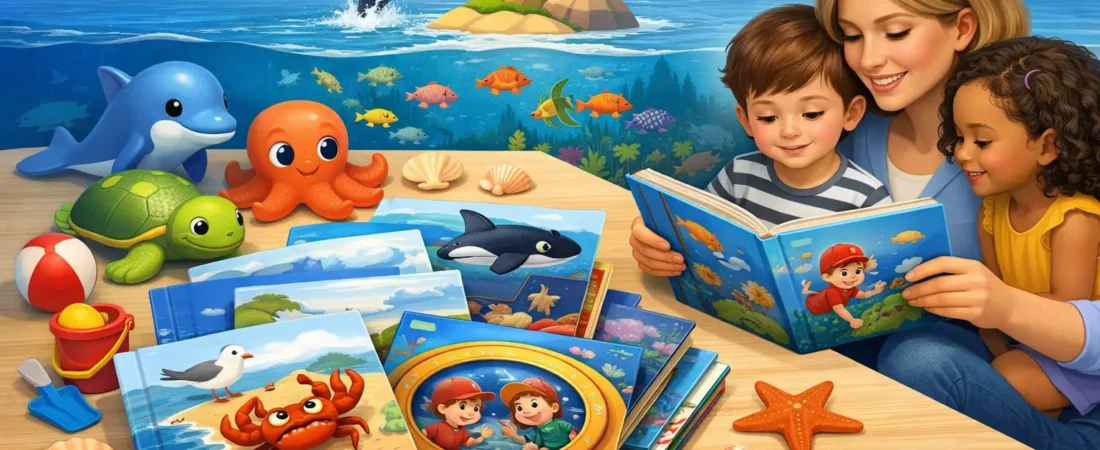
A preschooler can turn a couch cushion into a boat, a blue blanket into a rolling wave, and one good picture book into an unforgettable adventure. The best ocean books for preschoolers bring that same big imagination to story time, with friendly sea creatures, sandy shores, bright illustrations, and words little listeners will want to say again and again.
For families who love beach days, Cape Cod memories, or simply a cheerful screen-free afternoon, ocean-themed books offer plenty to talk about. A child may giggle at a pouty fish, wonder how a crab finds a new home, or point out every whale on the page. The right book does more than teach ocean facts. It makes room for curiosity, comfort, and togetherness.
What Makes an Ocean Book Work for Preschoolers?
Preschool readers do best with stories they can join. Rhymes, repeated phrases, lively pictures, and familiar feelings all help children stay involved. A book does not need to explain every creature or ocean zone to be worthwhile. In fact, too many facts on one page can turn a cozy read-aloud into a lesson children are not ready for.
Look for books that invite a response. Can your child make a wave sound? Can they spot a tiny fish hiding in the coral? Is there a line they can repeat before you turn the page? Those small moments build confidence and make rereading feel fresh.
Some families prefer gentle stories about friendship and belonging. Others want a fact-filled book about sharks, whales, or tide pools. It depends on your child. A mix of both gives little readers a chance to enjoy make-believe while growing curious about the real blue world beyond the shore.
12 Ocean Books for Preschoolers to Share
- Commotion in the Ocean by Giles Andreae is made for read-aloud fun. Its bouncy rhymes introduce sea animals with silly details and playful personality. This is a wonderful choice for children who like to clap, wiggle, and repeat favorite lines.
- The Pout-Pout Fish by Deborah Diesen follows a glum fish who believes he is meant to spread gloomy feelings. The bright underwater setting and repeated refrain give preschoolers something to anticipate, while the story gently shows that moods can change.
- Swimmy by Leo Lionni has a simple, memorable message about courage and working together. The artwork feels different from many modern picture books, which can spark conversations about color, shape, and the way a small fish can be part of a very BIG plan.
- Mister Seahorse by Eric Carle celebrates the unusual fathers of the sea. The layered pages and colorful creatures keep young children interested, while the story offers a warm reminder that caring for others can look many different ways.
- A House for Hermit Crab by Eric Carle is a lovely pick for children who are learning about change. Hermit Crab outgrows his shell and gathers ocean friends to help make a new home feel just right. The story is gentle, reassuring, and full of details to point out.
- Over in the Ocean: In a Coral Reef by Marianne Berkes combines counting, rhyme, and ocean animals. It works especially well when a child is beginning to notice numbers but still wants a story that feels musical rather than instructional.
- The Snail and the Whale by Julia Donaldson brings a tiny traveler and a giant whale together for a grand ocean journey. Its rich rhyme may be best for children who can sit with a slightly longer story, but preschoolers often love the contrast between the very small snail and the enormous whale.
- Whale, Whale, Whale! by April Pulley Sayre offers a lively nonfiction option. The language is energetic and the photographs provide a real look at these remarkable animals. Read a few pages at a time if your child is new to nonfiction picture books.
- The Storm Whale by Benji Davies has a quieter, tender feel. A child discovers a small whale after a storm and wants to help. It is a good choice for a calm bedtime read, especially for little ones who enjoy stories centered on care, family, and feelings.
- National Geographic Little Kids First Big Book of the Ocean by Catherine D. Hughes is built for browsing. You do not have to read it from beginning to end. Let your preschooler choose a page about dolphins, sea turtles, or sharks, then follow the questions they ask.
- Flotsam by David Wiesner tells much of its story through pictures rather than text. That makes it a special shared-reading experience: ask what your child thinks is happening, listen to their answer, and let their imagination lead. Every reading can become a new story.
- Coby’s Cape Cod Vacation from Coby’s Adventures brings the joy of a family coastal trip close to home. With colorful illustrations, rhyming language, and recognizable family moments, it is a cheerful choice for children who dream about beaches, road trips, and time together. Explore and purchase Coby’s Adventures books through Ken Frank’s bookstore, or look for them on Amazon and Barnes & Noble.
Make Story Time Feel Like a Seaside Adventure
You do not need a beach house or a complicated activity plan to make an ocean book memorable. After reading, spread out a blue towel and let your child arrange toy animals on their own pretend shoreline. Fill a small bowl with shells, if you have them, and invite your child to sort them by size. Even a simple question such as, “Which ocean animal would you like to meet?” can keep the story going.
Try not to turn every book into a quiz. If a child wants to linger on one page and make up a voice for the octopus, that is reading too. If they want the same rhyme three times in a row, they are building familiarity with language and enjoying the comfort of a beloved routine.
Ocean stories also pair beautifully with screen-free family time. A book can become the gentle pause after a busy day, the companion packed for a long car ride, or the quiet start to an afternoon of imaginative play. Coby’s Adventures is created for those ordinary moments that children remember as something wonderfully special, so consider adding a rhyming Coby story to your next family reading stack.
Choosing a Book for Your Child’s Stage
For younger preschoolers, choose sturdy pages, short text, big expressions, and a refrain they can echo. Books with one creature per spread are often easier to follow than a busy coral reef packed with tiny details. For older preschoolers, longer rhymes, simple story problems, counting, and factual side notes can hold attention longer.
It also helps to consider a child’s temperament. A child who is cautious about new places may connect with a character learning to adjust. A child who loves animals may be happiest with photographs and creature facts. A child who craves silly fun may want a story filled with funny fish and surprising sounds. There is no single best pick, only the book that makes your child lean closer and ask for one more page.
Keep a favorite ocean book within reach, and let it be an invitation to talk, laugh, pretend, and slow down together. When you are ready for another colorful family read, explore Coby’s Adventures by Ken Frank and purchase the series through Ken Frank’s bookstore, Amazon, or Barnes & Noble. A simple story shared in a cozy spot can send a little imagination sailing far.